AutoDeal Canada

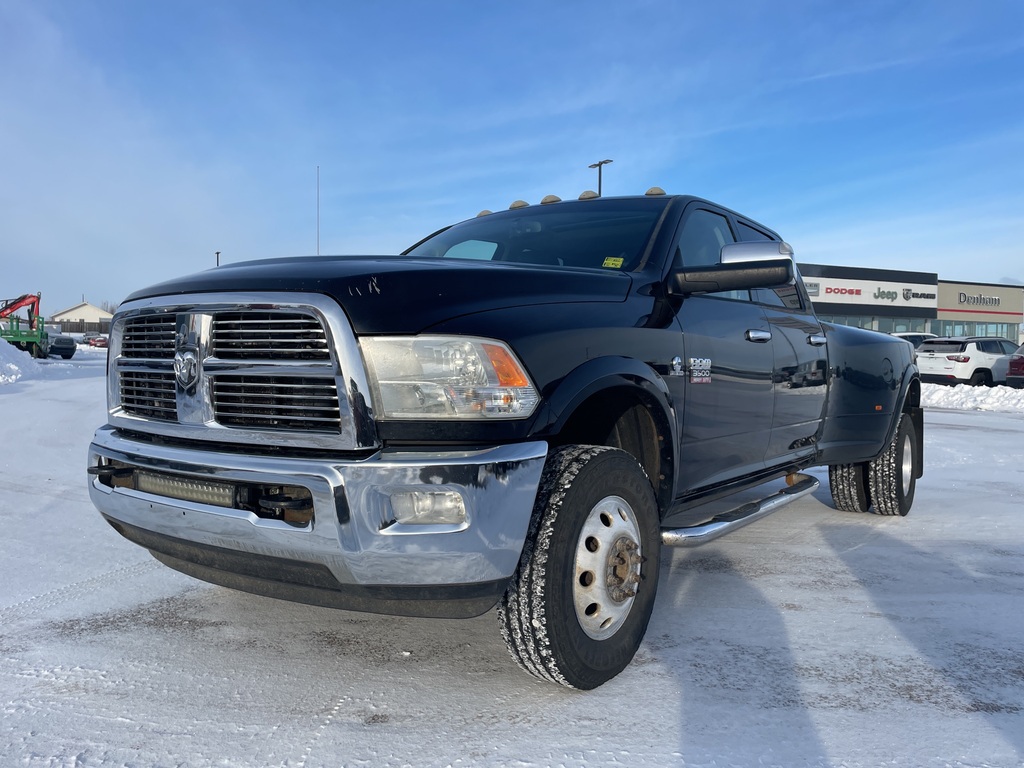
RAM 3500 2012 for sale

6 vehicles available

Average Price

From

$23 005

Listings

6

Frequently Asked Questions

01

Is the RAM 3500 dually truly necessary, or will a RAM 2500 handle a large fifth-wheel RV in Quebec?

The answer depends on the trailer's GVWR. For a fifth-wheel RV between 6,000 and 9,000 kg, the RAM 3500 dually is strongly recommended: the dual rear wheels reduce lateral sway, spread the load across six contact patches instead of four, and lower the kingpin load per tyre. For a fifth-wheel below 5,500 kg, a properly configured RAM 2500 Cummins is legally and mechanically sufficient. On Quebec's Gaspesian coastal routes or northern roads with crosswinds and crowned pavement, the dually's stability margin justifies the price premium — especially if the trailer exceeds 10 metres in length and is prone to aerodynamic buffeting.

02

What specific maintenance costs should I budget for on a used RAM 3500 Cummins?

The Cummins 6.7L is durable but its service costs are real: oil changes requiring 5-6 litres of heavy-synthetic ($120-$180 per service), dual fuel filters (primary and secondary) replaced every 40,000 km ($80-$120), preventive DPF cleaning at 200,000 km ($400-$700), and DEF fluid top-up approximately every 15,000 km ($30-$50 for 10 litres). Bosch common-rail injectors typically last to 300,000 km with clean fuel and regular filter changes. The largest risk on a high-mileage RAM 3500: the dually rear differential, which should be inspected for bearing play and gear-tooth wear at 100,000 km intervals. Budget $2,500-$4,000 for a differential rebuild if service history is unknown.

03

How do I tell a fleet RAM 3500 from a private-owner truck when buying used?

Visual cues: fleet identification placards or decal ghosts, factory-applied plastic box liner rather than spray-on bedliner, steering wheel worn on the left-side rim (a truck driver habit), and replaced rear tow hooks. On the OBD-II scanner: frozen fault-code events logged in non-volatile memory (even if active codes are cleared), a high DPF regen count indicating frequent short-cycle operation, and cold-start event totals disproportionate to odometer reading. Request a Carproof/CarFax Canada report and provincial registration history — a vehicle registered to a construction company or municipality for its first three years is a clear commercial-use signal. Price accordingly: a well-documented ex-fleet unit with documented maintenance is often a better buy than a private unit with incomplete records.

04

Is the 6.4L Hemi gasoline RAM 3500 worth considering over the Cummins diesel?

The 6.4L Hemi at 410 hp offers more peak horsepower, quieter cold-starts, lower maintenance costs (no DPF, no DEF, cheaper oil changes) and simpler servicing in remote areas where diesel-specialist shops are scarce. It is the right engine for loads under 5,000 kg and for buyers operating far from urban service centres. Fuel economy is the significant trade-off: 18-22 L/100 km versus 13-16 L/100 km for the Cummins. Under regular heavy towing, the diesel recoups its purchase premium in fuel savings within approximately 100,000 km of towing mileage. For a RAM 3500 dedicated to consistent heavy hauling, the Cummins is the rational long-term investment; for occasional towing in remote regions, the Hemi is a valid alternative.

05

Is the RAM 3500 dually's 7,680 lb payload rating actually usable day-to-day without compromising road safety?

Legally yes, provided loading respects provincial per-axle weight limits (typically 9,100 kg per tandem axle in Quebec). Practically, a fully loaded RAM 3500 changes character significantly: braking distance increases 30-40%, steering effort rises, and tyre pressures must be adjusted to rated load values (the stock LT245/75R17 tyres run up to 80 psi at full capacity). For frequent use above 5,000 kg payload, adding progressive-rate shock absorbers (Bilstein 5100 or Fox 2.0) measurably improves stability and reduces body roll under asymmetric loads. The RAM 3500 remains the most stable box-bed truck in class at full payload, but it demands a deliberate adaptation in driving style — longer following distances, earlier braking points, and careful load distribution across the box.